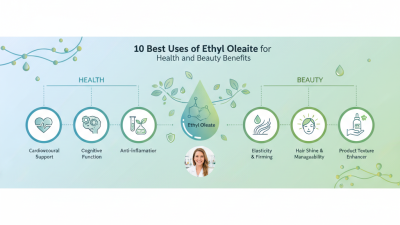
What is Ethyl Oleate and How Does It Benefit Your Health
Ethyl Oleate, a fatty acid ester derived from ethanol and oleic acid, has garnered attention in both the food and pharmaceutical industries due to its potential health benefits and functional properties. According to a report by the International Journal of Food Science & Technology, Ethyl Oleate serves multiple roles, including as a flavoring agent, solvent, and emulsifier, highlighting its versatility in various applications. The compound is recognized for its lipid-based characteristics, making it an effective carrier for vitamins and nutrients, enhancing bioavailability and absorption in the body.
Recent studies have also indicated the potential benefits of Ethyl Oleate in health care. A study published in the Journal of Biomedical Materials Research suggests that this compound may possess anti-inflammatory and antioxidant properties, which could play a supportive role in managing chronic conditions such as cardiovascular diseases and diabetes. Furthermore, the global market for Ethyl Oleate is projected to grow significantly, driven by the increasing demand for natural and organic ingredients in food production and dietary supplements. This underscores the relevance of researching Ethyl Oleate, ensuring that its potential is fully understood for both consumer safety and health optimization.

What is Ethyl Oleate?
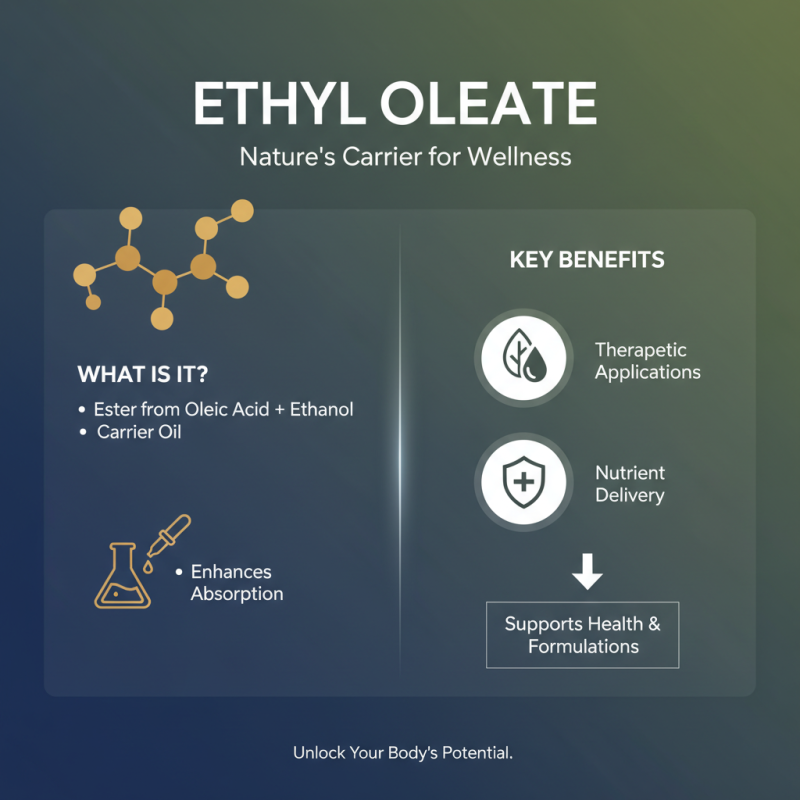
Ethyl oleate is an ester formed from ethanol and oleic acid, a monounsaturated fatty acid commonly found in various animal and vegetable fats. It appears as a colorless, oily liquid with a slightly sweet taste and odor. Ethyl oleate is often utilized in the pharmaceutical and cosmetic industries due to its emollient properties, making it an effective ingredient in creams and ointments, where it acts as a skin softener and barrier.
In addition to its role in cosmetics, ethyl oleate holds potential health benefits. It can aid in the absorption of nutrients and medications, enhancing their effectiveness by facilitating their transport across cell membranes. This property makes it valuable in formulations intended for improved bioavailability. Moreover, due to its fatty acid content, ethyl oleate may support skin health by providing hydration and maintaining skin barrier integrity, promoting a smoother and healthier appearance. Overall, its versatile applications and beneficial properties make ethyl oleate a noteworthy component in health and wellness products.
Chemical Composition and Properties of Ethyl Oleate
Ethyl oleate is an ester derived from oleic acid and ethanol, known for its light, oily texture and pleasant aroma. Its chemical formula is C18H34O2, and it falls under the category of fatty acid esters. Ethyl oleate is well-regarded for its emulsifying properties, making it a popular choice in the formulation of various cosmetic and personal care products. Additionally, it acts as a solvent and carrier for other ingredients, enhancing their stability and effectiveness.
One of the standout properties of ethyl oleate is its ability to aid in the absorption of active compounds, which is particularly beneficial in both topical applications and nutritional supplements. This feature makes it valuable in health products aimed at improving skin hydration and promoting overall skin health. Moreover, ethyl oleate is non-toxic and considered safe for use in various formulations, making it a favorable choice for manufacturers and consumers alike.
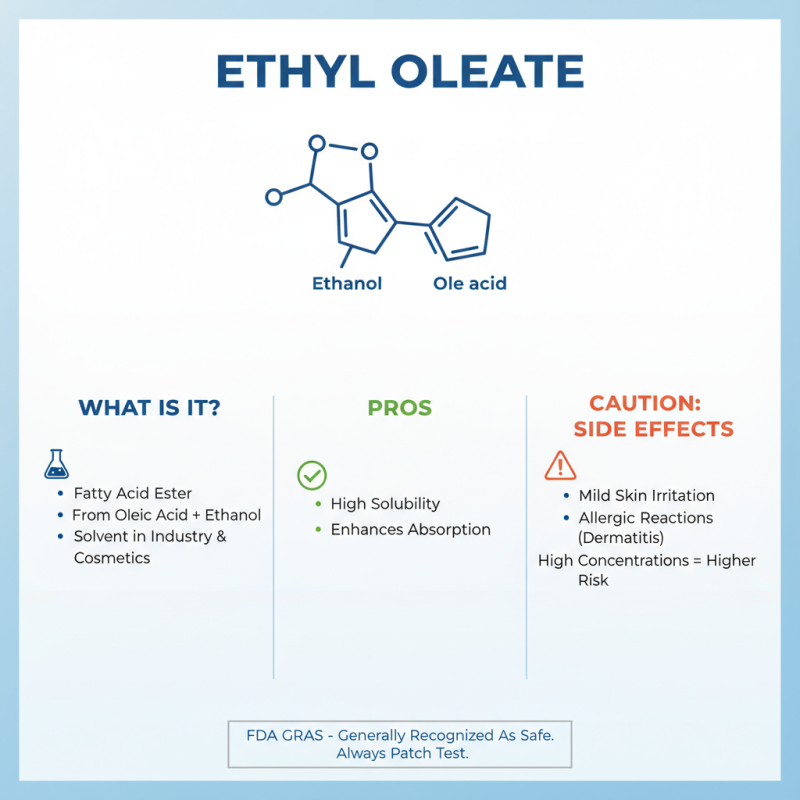
**Tips:** When using products containing ethyl oleate, always perform a patch test to check for any allergic reactions. Additionally, opting for ethyl oleate as part of your skincare routine can enhance the absorption of vitamins and other beneficial ingredients, maximizing your product's efficacy. Finally, ensure the product is stored in a cool, dark place to maintain its effectiveness over time.
Health Benefits of Ethyl Oleate
Ethyl oleate is an ester derived from oleic acid and ethanol, known for its numerous health benefits. One of the most notable advantages of ethyl oleate is its role as a carrier oil in various therapeutic applications. Due to its excellent solubilizing properties, it enhances the absorption of certain nutrients and bioactive compounds in the body, making it an attractive option in nutritional supplements and formulations.
In addition to its use as a carrier, ethyl oleate is recognized for its potential in promoting skin health. It possesses emollient properties, which help to keep the skin hydrated and improve its barrier function. This makes it an appealing ingredient in cosmetic and skincare products, as it can contribute to smoother and softer skin while potentially reducing the appearance of dry patches. Furthermore, ethyl oleate has been studied for its anti-inflammatory effects, suggesting it might help soothe irritated skin when used topically. Overall, the versatility of ethyl oleate in both therapeutic and cosmetic applications highlights its value in promoting overall health and wellness.
Applications of Ethyl Oleate in Medicine and Industry
Ethyl oleate is a fatty acid ester commonly used in both medical and industrial applications due to its unique properties. In the pharmaceutical industry, ethyl oleate serves as a solvent and an excipient in drug formulations. A report by the Global Pharmaceutical Excipient Market indicates that the demand for effective solubilizers like ethyl oleate is increasing, projected to grow at a compound annual growth rate (CAGR) of over 6% from 2021 to 2026. Its ability to enhance the solubility of hydrophobic drugs plays a vital role in improving therapeutic efficacy, making it an essential component in many injectable formulations.
In addition to its pharmaceutical uses, ethyl oleate is gaining traction in the cosmetic and dermatological fields. Its emollient properties make it a desirable ingredient in skincare products, facilitating moisture retention and enhancing skin texture. A study published in the Journal of Cosmetic Science highlighted that formulations containing ethyl oleate demonstrated improved skin absorption and lower irritation levels, further solidifying its status as a beneficial agent in topical applications.
Furthermore, its biodegradability and non-toxicity reinforce its appeal in various industrial uses, including as a lubricant and surfactant in formulation processes, aligning with the growing industry shift towards sustainable practices.
Potential Side Effects and Precautions of Ethyl Oleate
Ethyl oleate is a fatty acid ester derived from oleic acid and ethanol, commonly used as a solvent in various industrial applications. While it is praised for its solubility and ability to enhance the absorption of certain active compounds, potential side effects and precautions must be considered to ensure safe usage. Reports indicate that while ethyl oleate is generally recognized as safe (GRAS) by the Food and Drug Administration (FDA), some individuals may experience mild skin irritation or allergic reactions upon contact. A study published in the Journal of Toxicological Sciences highlighted that a small percentage of participants reported dermatitis when exposed to high concentrations of ethyl oleate, suggesting caution in its application, especially in cosmetics.
In addition to potential skin reactions, another consideration is the risk associated with improper ingestion. Ethyl oleate is not intended for internal consumption in substantial amounts. According to the American Journal of Clinical Dermatology, ingestion of large quantities can lead to gastrointestinal disturbances, including nausea and diarrhea. Thus, individuals should adhere to recommended guidelines and use ethyl oleate strictly as directed in formulations. Those with a history of sensitivity to fatty acid esters should consult healthcare professionals before using products containing ethyl oleate. Adopting these precautions can help mitigate risks and ensure a safe experience with this compound.