10 Best Uses of Ethyl Oleate for Health and Beauty Benefits
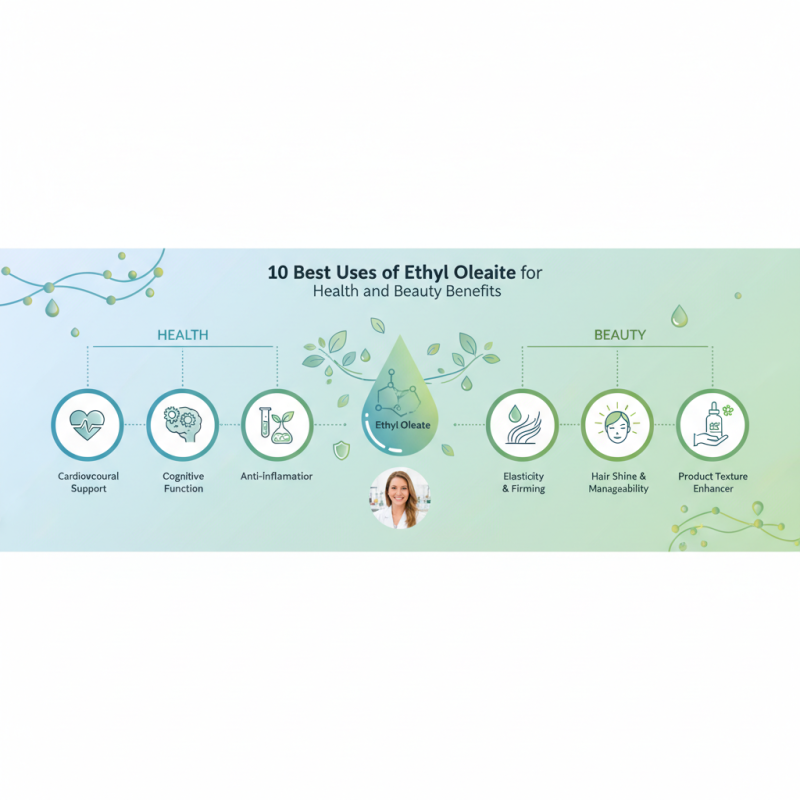
Ethyl Oleate has garnered attention in both health and beauty industries for its versatile applications and benefits. According to Dr. Emily Clarke, a renowned expert in cosmetic chemistry, “Ethyl Oleate is a remarkable compound that showcases potent moisturizing properties while offering a lightweight feel, making it ideal for various formulations.” As an ester derived from ethanol and oleic acid, this natural ingredient plays a vital role in enhancing product texture and efficacy.
In the realm of personal care, Ethyl Oleate is prized for its ability to act as an emollient, improving skin hydration and elasticity. Its unique molecular structure allows it to penetrate the skin effectively, delivering nourishment while avoiding the greasy residue often associated with traditional oils. Additionally, its potential in formulations extends beyond skin care, as it is also recognized for its role in hair care products, helping to maintain shine and manageability.
Moreover, Ethyl Oleate's bioactivity has piqued the interest of health professionals, who explore its potential benefits in various therapeutic contexts. This compound not only serves beauty purposes but also embodies a holistic approach to health and wellness, making it an invaluable asset in the quest for natural and effective solutions. With its broad spectrum of applications, Ethyl Oleate continues to be a topic of interest among scientists and consumers alike, paving the way for innovative advancements in both fields.
Benefits of Ethyl Oleate in Skin Care: A Comprehensive Analysis
Ethyl oleate, a fatty acid ester derived from oleic acid and ethanol, has garnered attention in the health and beauty industry for its diverse applications in skincare. Research indicates that ethyl oleate acts as a solvent for various active ingredients, enhancing their penetration into the skin. A study published in the "International Journal of Cosmetic Science" found that formulations containing ethyl oleate improved the delivery of vitamins and antioxidants, thus amplifying their benefits and efficacy. This property makes ethyl oleate an attractive component in serums and moisturizers designed to nourish and rejuvenate the skin.
Moreover, ethyl oleate is known for its emollient properties, which contribute to skin hydration. According to the "Journal of Lipid Research," moisturizers containing emollients can significantly increase skin hydration levels, helping to alleviate dryness and improve texture. Ethyl oleate, with its ability to create a protective barrier on the skin, plays a crucial role in preventing moisture loss while simultaneously providing a silky, smooth feel. This characteristic positions it as a valuable ingredient in various skincare formulations aimed at maintaining skin health and softness, especially in products tailored for sensitive or dehydrated skin types.
Ethyl Oleate as a Natural Emollient: Enhancing Moisture Retention
Ethyl oleate, a naturally occurring ester derived from oleic acid and ethanol, is celebrated for its remarkable emollient properties. As a natural emollient, ethyl oleate acts as a moisture-retaining agent, making it an invaluable addition to skincare formulations. It works by forming a protective barrier on the skin’s surface, preventing moisture loss and maintaining hydration levels. This property not only soothes dry skin but also enhances the skin's overall texture and appearance.
When incorporating ethyl oleate into your beauty regimen, consider the following tips. First, look for products that list ethyl oleate among their ingredients for better moisturization. Alternatively, you can create your own blend by mixing a few drops of ethyl oleate with your favorite carrier oil to enhance its nourishing effects. Additionally, it’s beneficial to apply ethyl oleate after a shower when your skin is still damp to lock in moisture effectively.
Ethyl oleate is not only effective for skincare but also finds its utility in hair care. Its ability to add shine and softness to hair makes it an excellent choice for those looking to improve their hair’s health without harsh chemicals. A simple tip is to use a mixture of ethyl oleate and essential oils as a leave-in treatment, providing hydration and manageability throughout the day.
The Role of Ethyl Oleate in Cosmetic Formulations: Stability and Efficacy
Ethyl oleate, a naturally occurring fatty acid ester, is gaining recognition in the cosmetic industry due to its remarkable stability and efficacy in formulations. It serves as an effective solvent for both oil and water-soluble compounds, making it an ideal choice for a wide range of cosmetic products. Its ability to enhance the solubility of active ingredients ensures that formulations remain consistent and effective, offering consumers reliable performance over time. Furthermore, its low viscosity and lightweight texture make it an excellent emollient, providing a smooth application while deeply moisturizing the skin.
In addition to its functional benefits, ethyl oleate contributes to the overall sensory experience of cosmetic products. It helps in creating a desirable texture, reducing greasiness, and leaving a non-sticky finish on the skin. This quality enhances user experience, making products not only effective but also pleasant to use. The stability of ethyl oleate under varying conditions further supports its role in preserving the integrity of formulations, ensuring that they maintain their intended benefits throughout their shelf life. With its dual role in enhancing stability and efficacy, ethyl oleate is proving to be a valuable component in modern cosmetic formulations.
Ethyl Oleate in Massage Oils: Therapeutic and Relaxation Benefits
Ethyl oleate, a fatty acid ester derived from oleic acid and ethanol, has gained popularity in the realm of
massage oils due to its therapeutic and relaxation benefits.
Research indicates that this compound acts as an effective emollient, enhancing
the absorption of active ingredients in topical formulations. A study published in the
Journal of Cosmetic Science highlighted that ethyl oleate
significantly improves skin hydration, making it a valuable addition to massage oils intended for relaxation therapy.
This property not only provides an immediate soothing effect on the skin but also aids in the deeper absorption of
additional therapeutic oils, amplifying their benefits during a massage session.
Furthermore, ethyl oleate's ability to enhance the glide and spreadability of massage oils cannot be overlooked.
According to a report by the International Journal of Ayurvedic Medicine,
the incorporation of ethyl oleate in massage formulations contributes to decreased friction on the skin, allowing for
smoother massage techniques. This quality is particularly important in therapeutic settings where maintaining
continuous pressure is vital for therapeutic effect. Additionally, ethyl oleate possesses a
mild, non-irritating profile, which is essential in the massage industry, where the comfort
of the client is paramount. As wellness trends continue to focus on holistic healing practices, the inclusion
of such beneficial ingredients in massage oils will likely become more prevalent.
Exploring Ethyl Oleate's Antimicrobial Properties for Skin Health
Ethyl oleate is gaining attention not only as a versatile ingredient in beauty formulations but also for its impressive antimicrobial properties that benefit skin health. Its ability to inhibit the growth of bacteria and fungi makes it an excellent choice for those looking to maintain clear and healthy skin. By integrating ethyl oleate into your skincare routine, you can potentially reduce the risks of acne and other skin infections.
When using ethyl oleate, consider mixing it with carrier oils to enhance its antimicrobial effects. This combination can create a soothing solution that targets problematic areas without causing irritation. Furthermore, you can incorporate a few drops into your regular moisturizer or serum for an added boost of protection and hydration.
Tips for maximizing the benefits of ethyl oleate: Always conduct a patch test before applying new mixtures to ensure your skin reacts well. Additionally, for individuals with sensitive skin, diluting ethyl oleate with a gentle carrier oil can help minimize any potential irritation while reaping its antimicrobial rewards. Lastly, consistency is key; try to apply your ethyl oleate-enriched product regularly to truly harness its skin-enhancing properties.
10 Best Uses of Ethyl Oleate for Health and Beauty Benefits
| Use |
Benefit |
Application |
Antimicrobial Properties |
| Skin Moisturizer |
Hydrates and softens skin |
Topical application |
Inhibits bacterial growth |
| Antiseptic |
Prevents infection |
Wound care |
Effective against pathogens |
| Carrier Oil |
Enhances absorption of essential oils |
Massage oils |
Supports skin barrier function |
| Makeup Remover |
Effectively removes makeup |
Cosmetic formulations |
Reduces microbial colonization on skin |
| Conditioning Agent |
Improves hair texture |
Hair care products |
Prevents fungal growth on scalp |
| Anti-inflammatory |
Reduces redness and swelling |
Topical creams |
Mitigates irritation |
| Lotion Base |
Provides a smooth texture |
Emulsions |
Offers stability against microbes |
| Nutrient Absorption |
Enhances skin's nutrient uptake |
Serums and oils |
Inhibitory effect on harmful microbes |
| Foot Care |
Soothes dry, cracked feet |
Foot creams |
Reduces risk of athlete's foot |